
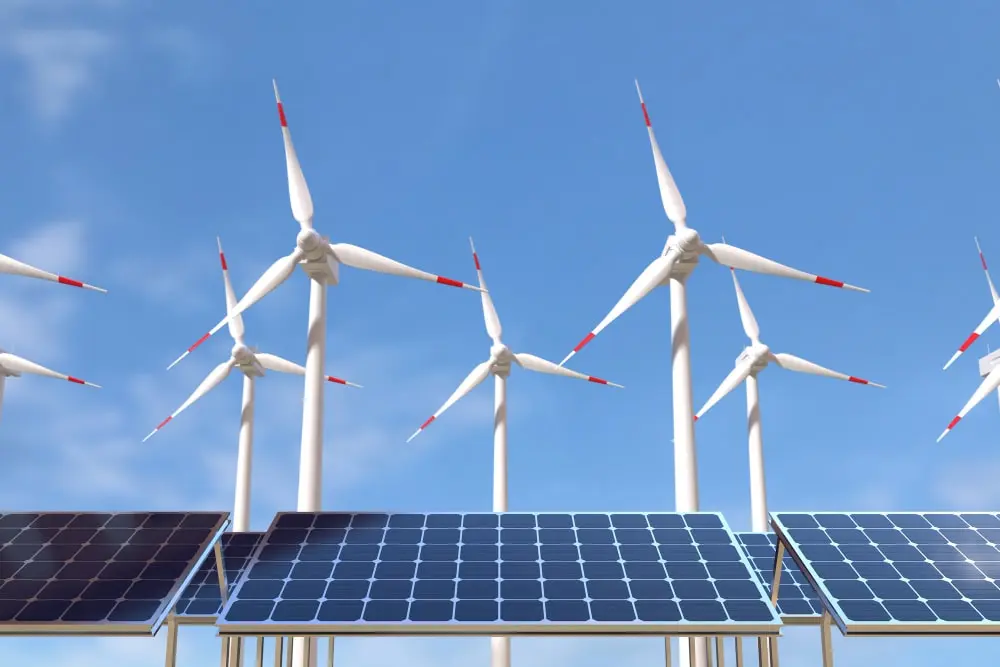
Have you ever found yourself in a heated debate about renewable energy, only to realize you’re not entirely sure if what you’re saying is fact or fiction? You’re not alone. As a researcher, I’ve heard it all – from well-intentioned misconceptions to outright myths that seem to persist despite overwhelming evidence to the contrary. It’s time to shed some light on these shadowy beliefs and power up our understanding of clean energy.
In this article, we’ll explore and debunk 10 of the most pervasive renewable energy myths. By the time you finish reading, you’ll be armed with solar power facts to navigate any clean energy conversation confidently. So, are you ready to separate fact from fiction and become a renewable energy myths-buster? Let’s dive in!
What is Renewable Energy?
Renewable energy is energy derived from natural sources that are continuously replenished on a human timescale. These sources include sunlight, wind, rain, tides, waves, and geothermal heat. Unlike fossil fuels, which are finite and take millions of years to form, renewable energy sources are sustainable and environmentally friendly.
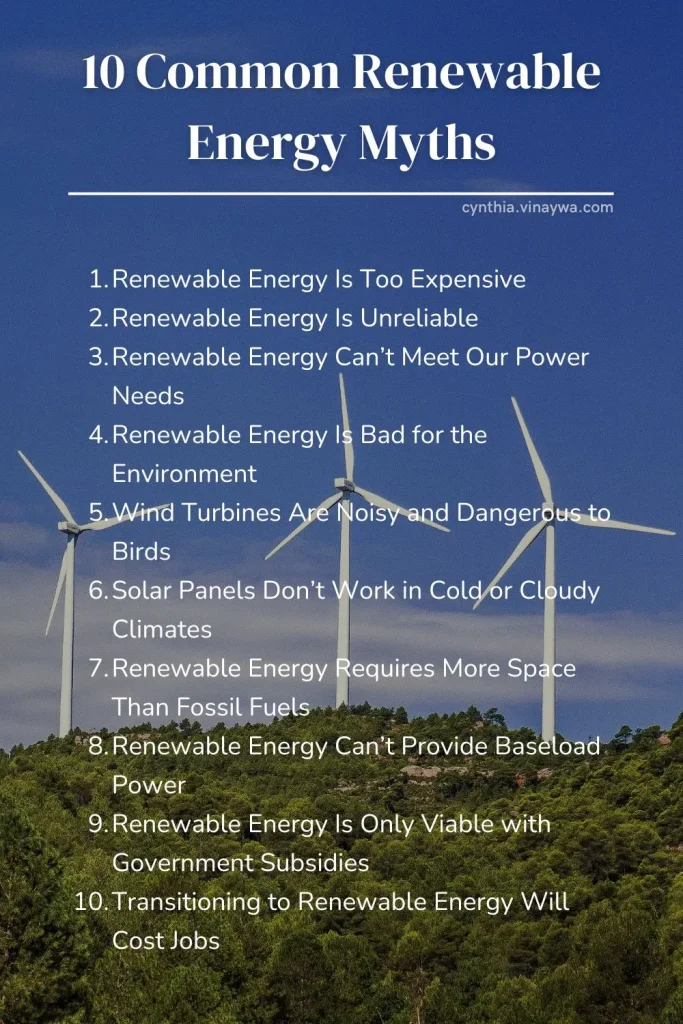
Common Renewable Energy Myths
Uncover the truth behind renewable energy myths. Learn facts about solar power, wind energy efficiency, and renewable energy reliability in this eye-opening guide.
Table of Contents
Myth 1: Renewable Energy Is Too Expensive
One of the most common renewable energy myths is that it’s prohibitively expensive. Let’s break this down:
- Historical context: Renewable energy was indeed more expensive in its early days
- Technological advancements: Costs have dramatically decreased over the past decade
- Current reality: In many areas, renewables are now cheaper than fossil fuels
The Numbers Don’t Lie
- Solar power costs have dropped by 89% since 2010
- Wind energy costs have fallen by 70% in the same period
- In 2020, 62% of new renewable power generation was cheaper than the cheapest new fossil fuel option
The truth is, that renewable energy is becoming increasingly cost-competitive and, in many cases, is already the most economical choice for new power generation.
Myth 2: Renewable Energy Is Unreliable
Critics often claim that renewable energy sources like solar and wind are too unpredictable to rely on. But is this really the case?
The Reality of Renewable Reliability
- Grid integration: Modern power grids are designed to handle variability
- Energy storage: Advancements in battery technology are addressing intermittency issues
- Diverse energy mix: Combining different renewable sources increases overall reliability
Moreover, traditional power sources aren’t immune to reliability issues. Extreme weather events, for instance, can disrupt fossil fuel supply chains and damage infrastructure.
Myth 3: Renewable Energy Can’t Meet Our Power Needs
Some skeptics argue that renewable energy sources can’t generate enough power to meet global energy demands. Let’s examine this claim:
- Current capacity: Renewables already provide a significant portion of global energy
- Growth potential: The renewable sector is expanding rapidly
- Technological improvements: Efficiency of renewable technologies continues to increase
The Numbers Tell a Different Story
- In 2020, renewable energy sources accounted for 29% of global electricity generation
- The International Energy Agency predicts renewables will provide 95% of the growth in global power capacity through 2026
- Solar PV and wind power alone could meet global electricity demand 100 times over
The potential of renewable energy to meet and exceed our power needs is not just a possibility – it’s already becoming a reality.
Myth 4: Renewable Energy Is Bad for the Environment
Ironically, some argue that renewable energy sources harm the environment. Let’s clear the air on this myth:
Environmental Impact of Renewables vs. Fossil Fuels
- Emissions: Renewables produce little to no greenhouse gas emissions during operation
- Land use: While renewables do require land, their impact is often less than fossil fuel extraction and processing
- Wildlife: Proper planning and technology can minimize impacts on wildlife
It’s important to consider the entire lifecycle of energy production. When we do, renewables consistently come out as the more environmentally friendly option.
Myth 5: Wind Turbines Are Noisy and Dangerous to Birds
Wind energy often faces criticism about noise pollution and danger to birds. Let’s examine these claims:
The Truth About Wind Turbines
- Noise levels: Modern wind turbines produce minimal noise, often less than ambient background noise in rural areas
- Bird fatalities: While bird deaths do occur, they’re relatively low compared to other human-related causes
- Technological solutions: Newer turbine designs and siting practices are reducing impacts on wildlife
Studies show that fossil fuel power plants pose a far greater threat to birds and wildlife than wind turbines.
Myth 6: Solar Panels Don’t Work in Cold or Cloudy Climates
A persistent myth suggests that solar panels are only effective in warm, sunny areas. Let’s shine some light on this misconception:
Solar Power in All Weather
- Cold climates: Solar panels can actually be more efficient in colder temperatures
- Cloudy days: While output is reduced, solar panels still generate electricity on overcast days
- Real-world examples: Countries like Germany, with less-than-ideal solar conditions, are solar power leaders (After leading the field for several years, Germany ranked 5th globally in installed capacity in the International Renewable Energy Agency‘s (IRENA) global ranking in 2021.)
The effectiveness of solar power isn’t limited to sunny locales – it’s a viable option in a wide range of climates and conditions.
Myth 7: Renewable Energy Requires More Space Than Fossil Fuels
Some argue that renewable energy sources take up too much land. Let’s put this claim into perspective:
Land Use Comparison
- Direct vs. indirect land use: Consider the full lifecycle of energy production, including mining and transportation for fossil fuels
- Multi-use potential: Many renewable installations can coexist with agriculture or other land uses
- Efficiency improvements: Technological advancements are increasing energy output per unit of land
When all factors are considered, renewable energy often proves to be more land-efficient than fossil fuel alternatives.
Myth 8: Renewable Energy Can’t Provide Baseload Power
Critics often claim that renewable energy can’t provide consistent baseload power. Let’s examine this assertion:
Baseload Power and Renewables
- Grid flexibility: Modern grids are evolving to handle variable energy sources
- Energy storage: Advancements in storage technologies are addressing intermittency issues
- Complementary sources: Combining different renewable sources can provide consistent power
The concept of baseload power is evolving, and renewable energy is proving it can meet our constant energy needs.
Myth 9: Renewable Energy Is Only Viable with Government Subsidies
Some argue that renewable energy is only competitive due to government subsidies. Let’s unpack this claim:
The Economics of Renewable Energy
- Historical context: All energy sources, including fossil fuels, have received government support
- Current competitiveness: Many renewable projects are now cost-competitive without subsidies
- Long-term benefits: Investment in renewables provides economic and environmental returns
While subsidies have played a role in the growth of renewable energy, the industry is increasingly standing on its own economic merits.
Myth 10: Transitioning to Renewable Energy Will Cost Jobs
A common concern is that shifting to renewable energy will result in job losses. Let’s examine the employment landscape:
The Renewable Energy Job Market
- Job creation: The renewable sector is creating more jobs than are being lost in fossil fuel industries
- Diverse opportunities: Renewable energy jobs span a wide range of skills and education levels
- Future growth: The renewable job market is projected to continue expanding
The transition to renewable energy isn’t just about preserving jobs – it’s about creating new, sustainable employment opportunities for the future.
Frequently Asked Questions
Q: How long do solar panels and wind turbines last?
A: Solar panels typically last 25-30 years, while wind turbines have a lifespan of 20-25 years. Both can continue producing energy beyond these timeframes, albeit at slightly reduced efficiency.
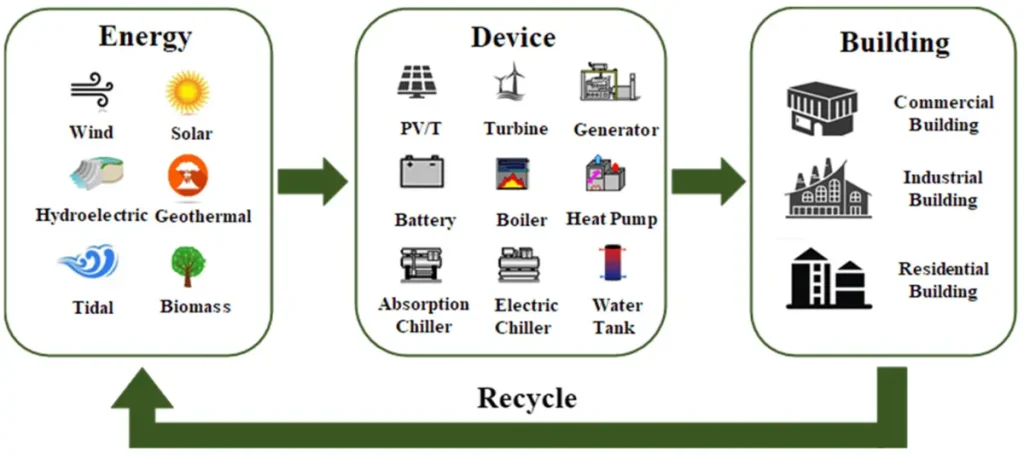
Q: Can we recycle renewable energy equipment?
A: Yes, many components of solar panels and wind turbines are recyclable. The industry is continually improving recycling processes to make renewable energy even more sustainable.
Q: How does renewable energy impact electricity prices for consumers?
A: In many areas, the increasing use of renewable energy is helping to stabilize or even reduce electricity prices for consumers due to its decreasing costs.
Q: Can renewable energy power electric vehicles?
A: Absolutely! In fact, powering electric vehicles with renewable energy maximizes their environmental benefits and is becoming increasingly common.
Q: How do renewable energy sources perform during extreme weather events?
A: While extreme weather can impact all energy sources, renewables often prove resilient. For example, distributed solar systems can provide power even when the main grid is down.
Conclusion
In conclusion, as we’ve seen, many common beliefs about renewable energy don’t stand up to scrutiny. The reality is that renewable energy is becoming increasingly affordable, reliable, and capable of meeting our energy needs. As we continue to innovate and improve these technologies, the case for transitioning to clean energy becomes even stronger.
By debunking these myths, we can have more informed conversations about our energy future. Remember, the shift to renewable energy isn’t just about powering our homes and businesses – it’s about powering a sustainable future for our planet.
Ready to learn more about how renewable energy can power your life? Subscribe to our newsletter and discover how you can be part of the clean energy revolution!